
Fearing likely shortage, the government on Thursday said it has made an advance plan to import about 10 lakh tonne higher quality of tur dal via private trade this year to meet the domestic requirement. The issue was discussed in a high-level meeting called by the cabinet secretary to review the prices of essential commodities, especially pulses and onions. Tur production is pegged lower at 3.89 million tonne in the 2022-23 crop year (July-June) from 4.34 million tonne in the previous year as per the initial projection made by the agriculture ministry. Tur is a kharif crop.

Prices of the key vegetable have also gone up in various cities.

Speaking to reporters in Bengaluru on the sidelines of the Eighth National Conference on Krishi Vigyan Kendras 2013, Pawar also ruled out the possibility of traders exporting onions to other countries where prices are less than India.

The unexpected and heavy rain has affected standing crops in the onion producing regions in the state, and it is beginning to make its impact felt. It is said that even slight excess in rainfall can damage the highly perishable commodity.

They are worried at more than one forecast of a possibly weak monsoon, reports Dilip Kumar Jha.
Do you know how to buy the best lady's fingers? Or choose the best cauliflower?
The amendments to the six-and-half-decade law provides that stock holding limit on commodities will only be imposed under exceptional circumstances like national calamities, famine with a surge in prices, the minister said.

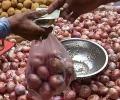
Currently, onion is being sold at Rs 36 per kg in retail markets of the national capital and Rs 32 per kg each in Mumbai, Kolkata and Chennai, according to the Consumer Affairs Ministry that monitors prices of 22 essential food items.
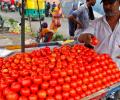
8 out of 10 households are planning to cut their tomato consumption if prices stay in the Rs 75-150 kg range over the next three months.

The rains after arriving over Kerala will quickly cover Tamil Nadu and Karnataka, but then might slacken a bit, which could delay its arrival over Northwest India.
The wholesale inflation rose to a 13-month high of 1.26 per cent in April fuelled by rising prices of food articles, especially vegetables, amid expectations of RBI holding interest rates in the policy review next month. The wholesale price index (WPI) based inflation has been rising for two months in a row.

Javed Akhtar says he has to write Hindi dialogues in the Roman script for the new generation of actors today because 'they can't read anything else'.

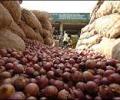
Increased harvesting is expected to boost supply
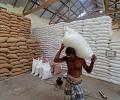
Amid the ongoing festival season and ahead of the elections for five state assemblies, the Centre is closely monitoring inflation, particularly in food items, to enable it to take steps to increase their supplies. "There is a complete no-nonsense attitude when it comes to food inflation, and instructions have been issued at all levels to be very sensitive to any possible price movements in any commodity," a senior official explained. Sources have said that all departments dealing with food items have been instructed to keep a close eye on all commodities and maintain a weekly record of their price movements.

While people voted in a fifth round that will set the tone as this election rounds into the straight, and while Modi on the stump chews the cud of personal grievances and hackneyed promises that have long since passed their use-by date, there is a rogue wave rising -- what damage it will do, we will know 16 days from today, observes Prem Panicker.
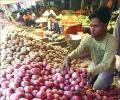
Terming the rise in October retail inflation despite a bumper crop as "disturbing", India Inc said the government must immediately address supply side bottlenecks to bring down the consumer price inflation.
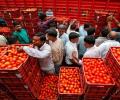
All India average retail tomato price, which has shot up by 63 per cent to Rs 67 per kg over the last year due to unseasonal rains, are likely to soften from December with the arrival of fresh crop from northern states, the government said on Friday. In the case of onions, retail prices have substantially subsided below to the level that prevailed in 2020 and also 2019, it said. "Tomato arrivals from north Indian states will start from the beginning of December itself, which will add to availability and lead to fall in prices.

Reddy directed the officials to treat the storm as a major challenge to avoid loss of life and property as the winds are expected to blow gales reaching speeds of up to 110 kilometres per hour.

We'd take these healthy millet cutlets over the regular aloo tikki any day!

'There are occasions when the prices of individual items like food raise inflation; then supply-side measures must be taken.' 'But if there is continued inflation, it means liquidity is aggravating the situation.'

Pakistan's Finance Minister Miftah Ismail on Monday said the government can consider importing vegetables and other edible items from India following the destruction of standing crops due to massive floods, three years after Islamabad downgraded trade ties with New Delhi over the Kashmir issue.

A downturn in Indian demand could hit global gold prices.
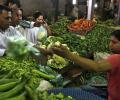
Costlier vegetables and eggs pushed up retail inflation to a nearly six-and-a-half year high of 7.61 per cent in October, keeping it significantly above the comfort zone of the Reserve Bank.

Vegetable rates may ease from September, led by tomato prices, which have started showing signs of correction on the back of increased supply, Reserve Bank of India (RBI) Governor Shaktikanta Das said on Wednesday. "Looking ahead, the spike in vegetable prices in July is starting to see a correction, led by tomato prices. "New arrivals of tomatoes in mandis are already softening the prices, coupled with proactive supply management in the case of onions.
In a first, the Centre will start selling tomatoes at discounted rates in retail markets in the national capital and few other cities from Friday to provide relief to the consumers as the price of the kitchen staple is ruling high at over Rs 200 per kilogram in some parts of the country.

'We will celebrate Independence Day as usual, but not this celebration from August 15 to 22 (as sought by the Modi government).'
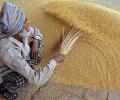
India has banned wheat exports with immediate effect as part of measures to control rising domestic prices, according to official notification. However, the export shipments for which irrevocable letters of credit (LoC) have been issued on or before the date of this notification will be allowed, the Directorate General of Foreign Trade (DGFT) said in a notification dated May 13. "The export policy of wheat ... is prohibited with immediate effect...," the DGFT said. It also clarified that wheat exports will be allowed on the basis of permission granted by the Government of India to other countries to meet their food security needs and based on the request of their governments.

Officials in the weather department said the monsoon is expected to be below normal because of the El-Nino effect.

Ghanwat, also a senior leader of Shetkari Sangathan, said he will mobilise one lakh farmers and bring them to Delhi in the next couple of months demanding farm reforms.
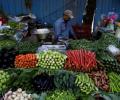
Vegetable arrivals at mandis, especially in Maharashtra, have declined by more than 50 per cent since the beginning of the month.

'Till the time the Modi government is ruling, they will write off loans of corporates and give opportunities to rogue businessmen to run away, so we will have to come again and again on the roads to demand our just rights.'
Just one year after taking office, Prime Minister Narendra Modi is facing a challenge that could come to haunt him.
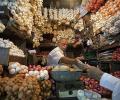
Among food articles, vegetable prices surged by 69.69 per cent mainly on account of onion, which witnessed 455.83 per cent jump in prices, followed by potato at 44.97 per cent.

With the start of rabi crop arrivals, the prices of agri commodities have declined in the past two months, raising hope that food prices will moderate in the weeks ahead.
Costlier vegetables slowly pushed retail inflation, which had remained well within the Reserve Bank's comfortable level of 4 per cent during most part of 2019, peaked to more than three-year high of 5.54 per cent in November.
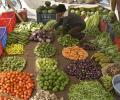
In most cases, however, retail consumers are paying higher prices in the absence of direct procurement from aggregator or farmers.
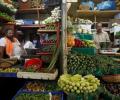
Farmers in Maharashtra, Gujarat, Karnataka, Tamil Nadu and Telangana anticipate a sharp decline in vegetable output this year, due to sustained declines in the water table after consecutive years of below-average rain. Prices of vegetables are expected to stay high for the next four to six weeks.

Prices have continued to move up in Delhi's markets, wholesale and retail, on supply worries and spoilage due to record cold weather.

'We are asking for the resignation of the Shivraj Singh Chouhan government for killing six farmers in Mandsaur district.' 'His is a killer government.' 'The anti-farmer policies of these state governments have brought ruin for the farmers.'
